Our Trade, Industry and Logistics team regularly publishes articles as part of the series “10 Frequently Asked Questions About…”. Through these articles, we aim to provide accessible and practical information on specific legal concepts, topics and current developments. Should you have an eleventh question after reading these ten frequently asked questions, we would of course be happy to assist you. You can contact one of our TIL (Trade, Industry & Logistics) colleagues for further information.
The ten most frequently asked questions about import duties.
1. What are import duties?
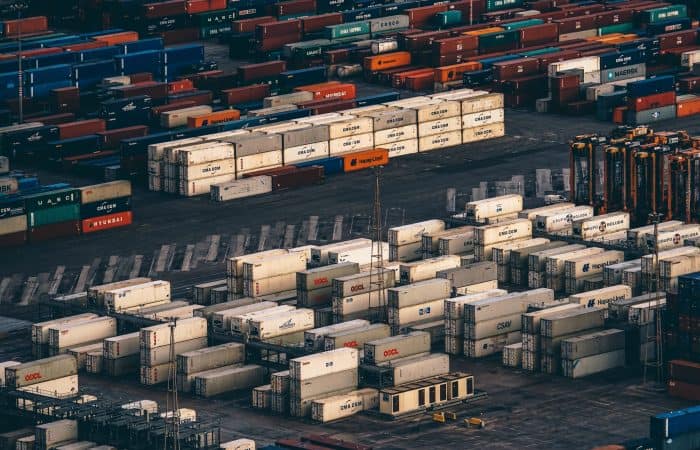
Import duties are taxes levied on goods imported into the EU from countries outside the European Union. Their purpose is to protect the EU internal market against cheaper products from third countries. In addition to regular customs duties, certain products may be subject to anti-dumping duties or other trade defence instruments.
2. Do you always have to pay import duties?
Not necessarily, as this depends on the product concerned. Within the EU, the free movement of goods applies, meaning that goods traded between EU Member States are not subject to import duties or customs declarations. Products imported from outside the EU are generally subject to import duties, although exceptions may apply. For example, reduced or zero duties may be applicable where a preferential trade agreement is in place.
3. How do I determine whether import duties apply to my product?
This depends on the commodity code of your product. Each product category has its own tariff rate, which customs authorities use to determine the applicable percentage. In addition, the agreed Incoterms are relevant, as they determine which party bears the import-related costs.
4. How are import duties calculated?
Import duties are usually calculated on the basis of the customs value. The customs value consists of the product price plus transport and insurance costs up to the EU border or the port of entry. In some cases, a specific duty applies, such as a fixed amount per unit, litre or kilogram.
5. What happens if I use an incorrect HS code?
If the commodity code is incorrect, customs authorities may detain the shipment, carry out additional inspections or impose additional assessments. Correct tariff classification is therefore essential, although it can be complex in practice.
6. Which documents are required when importing goods?
Typically, an invoice, a transport document, a commodity code and, in some cases, a certificate of origin are required. If the necessary documentation is incomplete or incorrect, customs may detain or delay the goods.
7. Are import duties the same throughout the EU?
Yes, the EU applies a single common tariff for goods imported from outside the EU. This is known as the Common Customs Tariff.
8. What are anti-dumping duties?
Anti-dumping duties are additional levies imposed when products are sold on the European market at artificially low prices, thereby harming EU producers. The EU may impose such duties on a temporary or definitive basis.
9. What about import duties from the United States, now that tariffs have been increased?
Since February 2026, the United States has applied higher tariffs to many products, generally around 10% on top of the standard rate. We have published a detailed article on this topic titled Trump – US Import Tariffs for Canada, Mexico and China on the Kneppelhout website.
10. To what extent can Kneppelhout assist with import-related matters?
Kneppelhout advises companies on customs and import regulations in the broadest sense. While we do not handle practical customs clearance, we do assist in assessing legal risks and addressing issues that may arise. This includes situations where customs authorities raise questions, shipments are detained, uncertainty exists regarding the correct commodity code or customs value, or a company is confronted with post‑clearance assessments or fines. In such cases, we analyse the legal issues, advise on the most appropriate course of action, and help limit damage and prevent future problems.
More information
If you have any questions following this article, please contact our Trade, Industry and Logistics specialists: